
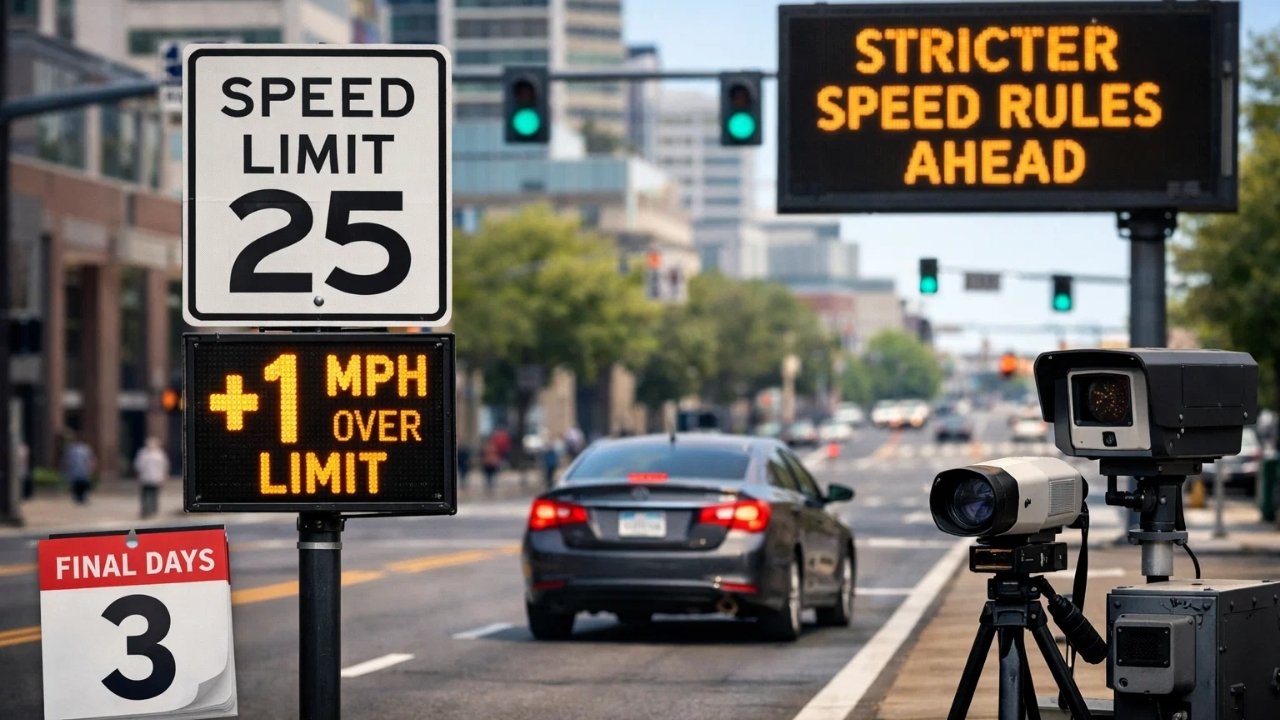
New York State drivers are in the final days before a tougher DMV point-system update begins that can affect motorists for very small speed-limit violations, including driving just 1 mph over the posted limit. The update is tied to how many driver violation points are added for certain offenses and how quickly those points can lead to DMV action.
Several reliable reports state the revised point rules take effect in February 2026, and they highlight a key change: minor speeding (including 1–10 mph over the limit) is expected to increase from 3 points to 4 points under the new framework. Local government messaging and major local media have publicly warned drivers about these changes ahead of the effective date.

Because points can affect a driver’s record, fees, and potential suspension, the approaching start date matters for everyday commuters as well as professional drivers. The most practical way to prepare is to understand what the rules are today, what is expected to change in February 2026, and how DMV point timelines work.
Table of Contents
What Is Changing in February 2026
Multiple New York-based sources report that the DMV will apply a stricter point-system standard starting in February 2026, including raising points for common violations and changing the suspension threshold window. FOX 5 New York reported that the state will move to a system where suspension risk can begin at 10 points over a two-year period rather than the earlier standard of 11 points in 18 months.
A public local-government notice from Erie County also warned residents about a “major DMV point system overhaul” coming in 2026, describing higher point penalties and broader enforcement coverage. This type of notice is important because it shows official local-government communication, even when the DMV’s main point table pages may not yet reflect future effective-date changes.

It is also important to separate two things: (1) what the law allows today and (2) what the point schedule and DMV action thresholds will be under the new system. The headline “1 mph” wording is not creating a new speed limit; it highlights that any amount over the limit is still speeding, and under the new point approach, that smallest measurable violation may carry more points than drivers are used to.
What “1 mph Over the Limit” Means in Practice
In New York, speeding is treated as exceeding the posted speed limit. That means a driver can be cited even for a very small amount over the limit, depending on enforcement conditions and officer judgment. The “1 mph” discussion is mainly about point consequences and stricter handling, not about creating a new category of speed limit.
Recently, New York DMV’s published point table lists speeding 1–10 mph over the posted limit as 3 points. Under the reported February 2026 changes, the same “lowest” speeding band is expected to become 4 points, which is why the change is being described as affecting drivers at the smallest measurable overage.

This matters because many drivers mentally treat small differences as harmless. But point systems are administrative tools: once points are assessed, they count toward DMV action thresholds and may also affect insurance pricing decisions made by insurers (insurers set their own pricing rules, but points commonly matter in underwriting).
Current NY DMV Speeding Points
The table below reflects the current DMV point schedule shown on the official NY DMV point-system page for speeding categories.
| Speed Over the Limit (NY) | DMV Points (Current) |
|---|---|
| 1–10 mph over | 3 |
| 11–20 mph over | 4 |
| 21–30 mph over | 6 |
| 31–40 mph over | 8 |
| More than 40 mph over | 11 |
These values are the official published baseline many drivers and traffic courts reference today. The upcoming change is being reported as an update that increases points for certain common violations, including minor speeding in the lowest band.
Reported February 2026 Changes Drivers Are Being Warned About
The table below summarizes changes that major local media and local government notices have publicly described as beginning in February 2026. This table is presented as “reported changes” because it is based on official communications and reputable reporting about the planned effective-date update.
| Category | Current Standard (Widely Cited) | Reported February 2026 Standard |
|---|---|---|
| Minor speeding (lowest band) | 3 points (1–10 mph over) | 4 points (reported) |
| Suspension threshold window | 11 points in 18 months (DMV guidance today) | 10 points in 24 months (reported) |
This “look-back window” change matters because it can capture a longer driving period when DMV evaluates point totals. Even if a driver receives tickets months apart, the longer window can still count them together toward the threshold.
License Suspension Risk and the Point Timeline
Under the current NY DMV description, drivers may face suspension if they reach 11 points within 18 months. The “18 months” is important because DMV counts points based on the violation date and uses that window to determine whether a driver qualifies for action.
The reported February 2026 revision changes both the point total and the timeline to 10 points within 24 months. This expands the tracking period while lowering the point threshold, which together can increase the number of drivers who reach review or suspension sooner if they commit multiple violations over time.
DMV also explains that points can lead to other impacts beyond suspension, including fees in certain point situations and potential insurance consequences. The DMV point system is specifically designed to identify drivers who repeatedly violate traffic rules and then apply escalating actions.
How Speeding Is Enforced and Why Small Differences Can Be Cited
Speed enforcement in New York is typically handled through law enforcement traffic stops and, in some areas, automated camera programs where authorized. Enforcement decisions can depend on road conditions, posted limits, enforcement zones, and local policy priorities.
Speed measurement methods can include radar, laser, pacing, and camera-based systems where legally permitted. Because the posted limit is a fixed maximum, even a small measured overage can technically qualify as speeding, and the decision becomes whether a citation is issued and what charge is written.
The “1 mph” attention point is linked to how the penalty system is structured. When point values rise for the lowest category, even the most minor ticket can produce a larger point jump on a driver’s DMV record than before, which is why the final days before the rule takes effect are being highlighted.
What Drivers Can Do Before the Change Takes Effect
Drivers who want to reduce risk under the new point approach can focus on measurable behaviors: maintaining speeds at or below posted limits, especially in lower-speed areas, near intersections, and in locations where limits change quickly.
If a driver already has points, the approaching February 2026 timing is especially important because the reported system uses a longer look-back period. That means spacing between tickets may matter less than drivers expect, since violations months apart can still be counted together.
Drivers can also verify current point rules and learn how DMV assigns points using the official DMV pages. If a driver needs to check their personal status, DMV provides record and points information through its official tools and guidance.