
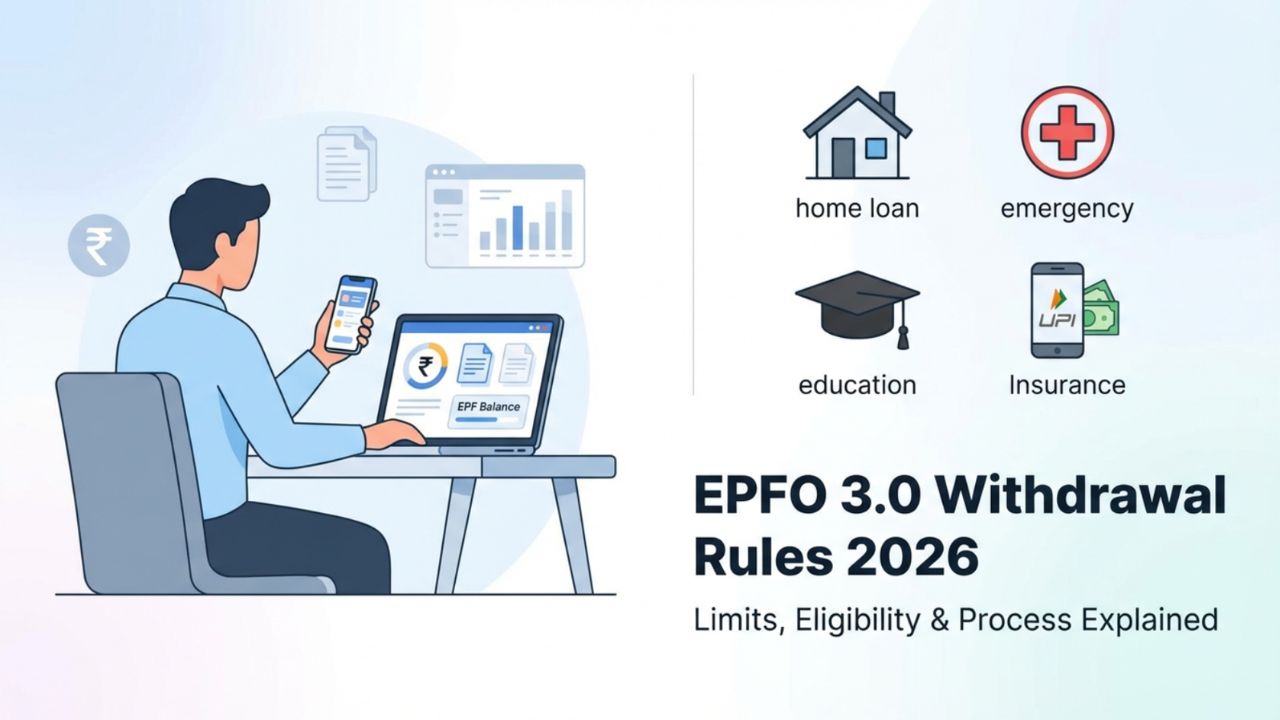
The Employees’ Provident Fund Organisation (EPFO) has introduced a modernized system widely referred to as EPFO 3.0, aimed at simplifying withdrawals and making access to funds faster than ever before. This upgrade focuses on digital processing, reduced paperwork, and improved flexibility for members while still protecting long-term retirement savings.
With millions of salaried employees relying on EPF for financial security, understanding the latest withdrawal rules has become essential. The updated framework allows easier access to funds for emergencies, housing, and unemployment, but also introduces safeguards to prevent early depletion of savings.
Table of Contents
What Has Changed in EPFO 3.0?
EPFO 3.0 is not just a minor update; it represents a shift toward a more digital and user-friendly system.
The most noticeable changes include faster claim settlements, simplified withdrawal categories, and the introduction of modern payment options like UPI-based transfers. The system now reduces dependency on employer approvals in many cases, making the process smoother for employees.
At the same time, EPFO has ensured that retirement savings remain protected by introducing controlled withdrawal limits and stricter rules for pension-related funds.
EPFO 3.0 Withdrawal Rules in Detail
75% Withdrawal Rule for Members
One of the most important updates is the ability to withdraw up to 75% of the total PF balance in certain situations, particularly during unemployment.
However, at least 25% of the balance must remain in the account. This ensures that employees still retain a portion of their savings for retirement.
This rule reflects a balanced approach, providing financial relief when needed while maintaining long-term security.
Conditions for Full EPF Withdrawal
Full withdrawal of the EPF balance is allowed only under specific conditions. These include retirement after the age of 55, permanent disability, or prolonged unemployment.
In most other situations, full withdrawal is restricted. This is done to discourage frequent or unnecessary withdrawals that could impact financial stability in later years.
Withdrawal After Job Loss
EPFO 3.0 provides structured access to funds during unemployment.
After one month of unemployment, a member can withdraw up to 75% of their PF balance. The remaining amount can be withdrawn later if the unemployment period continues.
This staged withdrawal system helps individuals manage immediate financial needs without exhausting their entire savings at once.
Purpose-Wise Withdrawal Limits and Eligibility
The withdrawal rules are designed around real-life needs. While the system has simplified categories, limits still vary based on the purpose and years of service.
Below is a clear overview:
| Purpose | Minimum Service Required | Withdrawal Limit | Key Condition |
|---|---|---|---|
| Medical Emergency | No minimum | Up to 6 months’ salary or employee share | Available anytime |
| Marriage | 7 years | Up to 50% of employee contribution | For self or family |
| Education | 7 years | Up to 50% of employee contribution | For higher studies |
| Home Purchase/Construction | 5 years | Up to 90% of PF balance | Property in member/spouse name |
| Home Loan Repayment | 10 years | Up to 90% of PF balance | Loan must be valid |
| House Renovation | 5 years (post purchase) | Up to 12× monthly salary | Limited usage |
| Unemployment | No restriction | Up to 75% initially | Balance later |
| Retirement | Not required | 100% withdrawal | After 55 years |
This structure ensures that funds are available for important life events while maintaining financial discipline.
Online PF Withdrawal Process (Step-by-Step)
The EPFO 3.0 system has significantly simplified the withdrawal process. Most claims are now processed digitally with minimal delays.
Step 1: Login to EPFO Portal
Members need to log in using their UAN and password on the official EPFO member portal.
Step 2: Verify KYC Details
It is important to ensure that Aadhaar, PAN, and bank details are linked and verified. Without proper KYC, claims may be delayed or rejected.
Step 3: Select Claim Option
Under the “Online Services” section, members can choose the claim option (Form 31, Form 19, or Form 10C).
Step 4: Enter Claim Details
The system requires users to select the purpose of withdrawal and enter the amount.
Step 5: Submit with OTP Verification
The claim is submitted using Aadhaar-based OTP authentication, ensuring secure processing.
Step 6: Track Claim Status
Users can track their application online. Most claims are settled within a few days under the updated system.
UPI and Instant Withdrawal Features
One of the most significant advancements in EPFO 3.0 is the introduction of UPI-based withdrawals.
This allows faster fund transfers directly into bank accounts, reducing waiting time. In addition, EPFO is working on enabling ATM-like access to PF funds, which could further improve accessibility in the future.
These features aim to bring PF withdrawals closer to the convenience of regular banking services.
Tax Rules on EPF Withdrawal
Taxation remains an important aspect of EPF withdrawals.
If funds are withdrawn after completing five years of continuous service, the amount is generally tax-free. However, early withdrawals may attract tax deductions, especially if PAN details are not properly linked.
Understanding these rules helps avoid unnecessary financial loss.
Key Points to Keep in Mind
There are certain practical considerations every EPF member should remember:
- Ensure KYC details are always updated
- Avoid withdrawing full PF during job changes
- Use partial withdrawal options wisely
- Check eligibility before applying
These steps can help avoid delays and ensure smoother claim processing.
EPFO 3.0 represents a major step toward modernizing the provident fund system in India. By combining faster digital processes with structured withdrawal limits, it creates a system that is both user-friendly and financially responsible.
Employees now have easier access to their funds during emergencies and important life events, while still maintaining a safety net for retirement.
Understanding these updated rules allows individuals to make better financial decisions and use their EPF savings more effectively.