
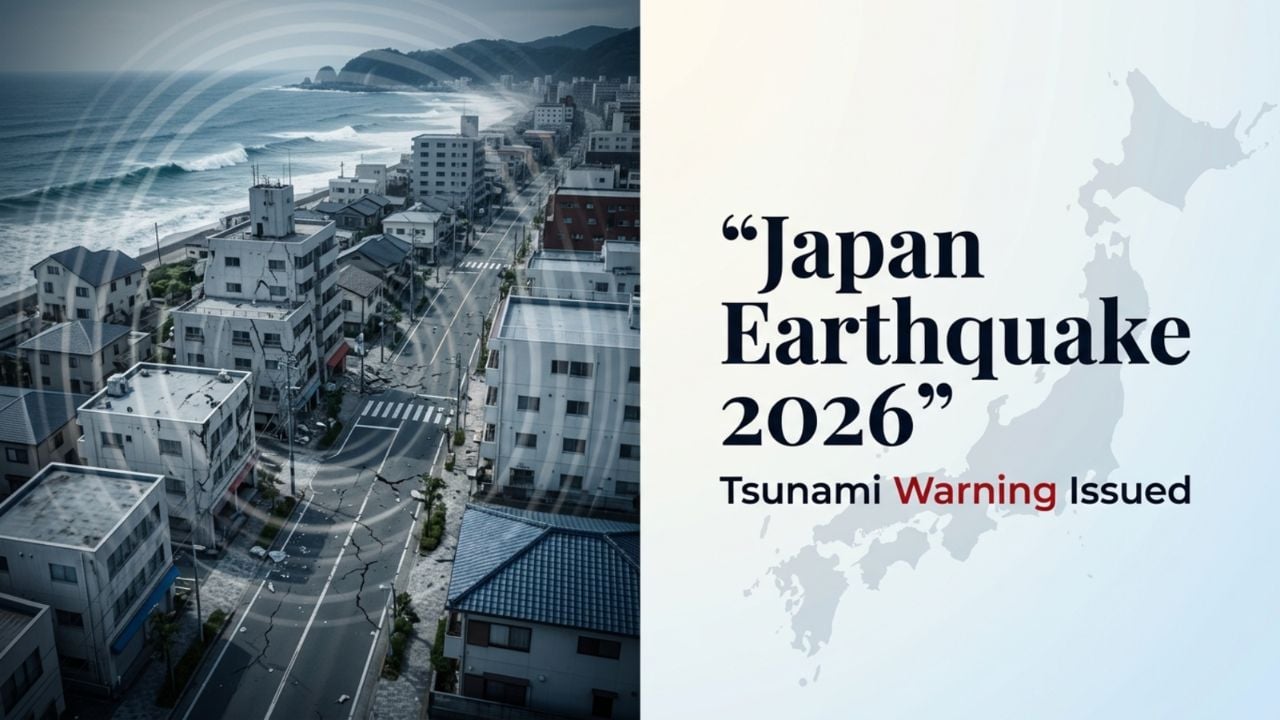
A powerful earthquake measuring around 7.4 to 7.5 magnitude struck off the northeastern coast of Japan on April 20, 2026, triggering widespread concern across the region. The quake occurred in the Pacific Ocean near the Sanriku coast, an area known for frequent seismic activity.
The tremors were strong enough to be felt across multiple regions, including parts of Tokyo, prompting immediate emergency response measures. Authorities quickly issued tsunami warnings and urged residents in coastal areas to move to higher ground.
Table of Contents
Earthquake Details and Epicenter
According to preliminary seismic data, the earthquake struck at a shallow depth of approximately 10 kilometers, which significantly increases surface-level impact. The epicenter was located off the northeastern coastline, close to regions like Iwate Prefecture and Aomori Prefecture.
Japan’s advanced earthquake monitoring systems detected the tremor within seconds, allowing authorities to initiate rapid alerts. Shaking intensity varied, but coastal and northern regions experienced the strongest impact.
Tsunami Warning and Wave Impact
Following the earthquake, a tsunami warning was issued for several coastal areas, including Hokkaido. Authorities warned that waves could reach heights of up to 3 meters, posing a serious threat to low-lying regions.
Initial reports confirmed that tsunami waves of around 80 centimeters were recorded at some ports. Emergency agencies emphasized that multiple waves could follow, often increasing in size after the first surge, which remains a critical risk factor.
Emergency Response and Precautionary Measures
The Japanese government activated its national disaster response mechanism immediately after the quake. Evacuations were ordered in vulnerable coastal zones, with residents directed to shelters and elevated locations.
Transportation services, including high-speed rail networks, were temporarily suspended to ensure safety. Authorities also instructed fishing vessels and ships to move into deeper waters to avoid tsunami damage.
Infrastructure and Damage Assessment
As of now, there are no confirmed reports of large-scale destruction or casualties, though assessments are still ongoing. Officials are closely monitoring key infrastructure, including ports, highways, and energy facilities.
Nuclear installations, including those in affected regions, are undergoing safety inspections as a precaution. Japan’s strict safety protocols ensure immediate checks following any major seismic event.
Why Japan Is Prone to Earthquakes
Japan is situated along the Pacific Ring of Fire, a highly active seismic zone where multiple tectonic plates intersect. This makes the country one of the most earthquake-prone regions globally, experiencing frequent tremors of varying intensity.
Strict building codes, early warning systems, and disaster preparedness programs have significantly reduced the impact of such events over time, though risks remain high during major quakes.
Current Situation and Advisory
Authorities continue to monitor the situation closely, warning that aftershocks and additional tsunami waves may occur. Residents in affected regions have been advised not to return to coastal areas until official clearance is given.
The situation remains dynamic, with further updates expected as rescue teams, meteorological agencies, and disaster management authorities continue their assessments.