
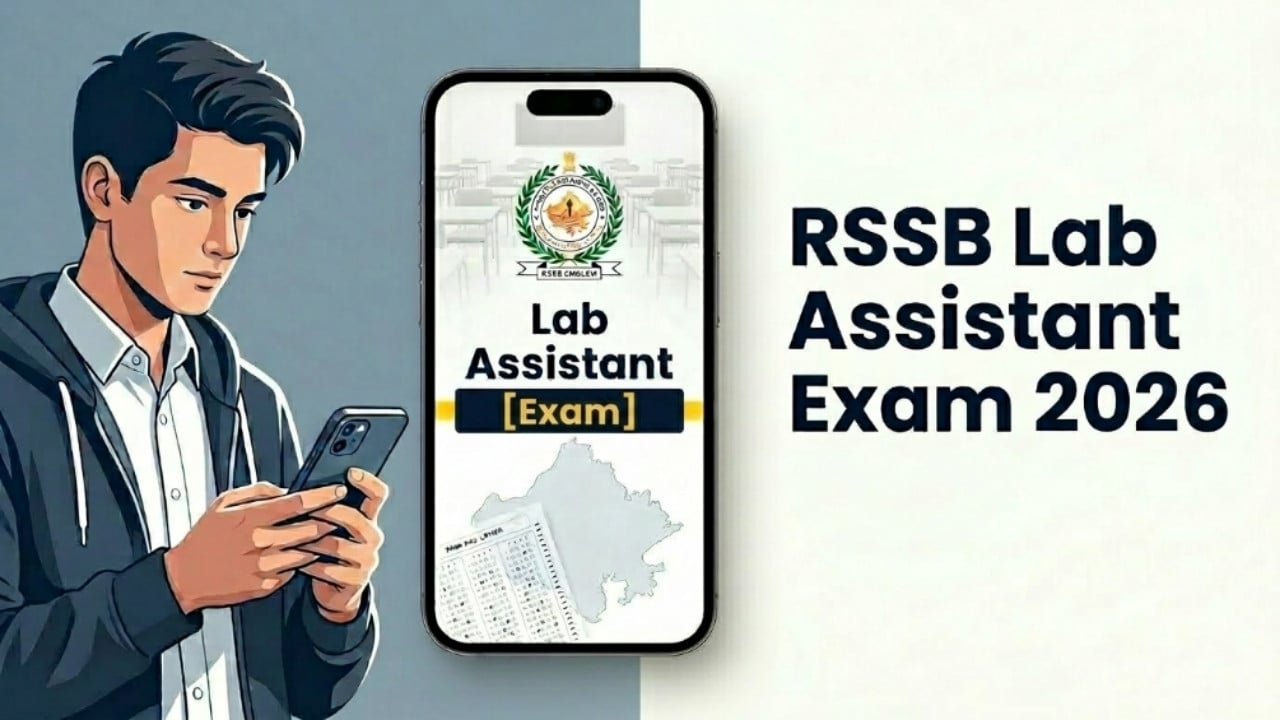
The Rajasthan Staff Selection Board (RSSB) has confirmed the Lab Assistant Exam Date 2026, bringing the recruitment process into its decisive phase. The written examination will be conducted on May 9 and 10, 2026, across designated centres in Rajasthan.
This confirmation eliminates uncertainty around scheduling and signals that the recruitment cycle has transitioned from application processing to execution. For candidates, the focus now shifts entirely to performance, as no major procedural stages remain before the exam.
Recruitment Process Enters Examination Phase
Based on the current process stage, the application window and data verification phases have already been completed. Candidate records have been finalised, and the board has issued a structured exam schedule across streams.
The upcoming step is the release of admit cards, which will operationalise candidate allocation at the centre level. This indicates that backend preparations, such as centre mapping, seating plans, and candidate grouping, are already underway.
At this phase, no further changes in schedule are expected unless unforeseen administrative issues arise.
How the 2026 Cycle Progressed
The recruitment timeline follows a standard state-level pattern. Applications were accepted from January 27 to February 25, 2026, after which scrutiny and database preparation were carried out.
The gap between application closure and exam date is approximately 10–11 weeks. In similar RSSB recruitments in previous years, this interval typically ranged between 8 to 12 weeks. The 2026 schedule falls within this range, indicating a stable and predictable process cycle.
This consistency is relevant for candidates because it reflects the board’s adherence to planned timelines, reducing the likelihood of last-minute delays.
What Happens Next: Admit Card Release and Final Instructions
The next operational milestone is the release of admit cards, expected in the last week of April. This document will include exact exam centre details, shift timings, and reporting instructions.
Once admit cards are issued, candidates will need to:
- Download and print the hall ticket
- Verify personal and exam-related details
- Review exam-day protocols carefully
After this stage, the process moves directly to examination, followed by answer key release and result preparation.
What Candidates Should Do Right Now
Candidates should now move into a revision-focused phase rather than attempting new topics. Given the limited time, performance improvement depends on accuracy, speed, and exam temperament.
Priority actions include practising full-length mock tests under timed conditions, revising core subject concepts, and analysing previous year question patterns. Candidates should also prepare required documents in advance, including valid ID proof and printed admit card once released.
Those travelling from outside districts should begin planning logistics early, as centre allocation will be confirmed shortly.
Clarifying Exam Structure and Competition Level
The RSSB Lab Assistant exam is conducted in offline (OMR-based) mode with objective-type questions. Selection is primarily based on written exam performance, followed by document verification.
With 804 vacancies and a high volume of applicants, competition is expected to be significant. Unlike qualifying exams, this is a rank-based recruitment process where marginal score differences can impact final selection.
Understanding this distinction is important, as candidates must aim for relative performance rather than just clearing a minimum threshold.
How RSSB Structures Exam Scheduling
The two-day, stream-wise scheduling is designed to manage large candidate volumes efficiently. By separating Science, Geography, and Home Science streams across different dates, the board reduces logistical pressure on centres and ensures smoother conduct.
Internally, candidates are allocated to centres based on application data, regional distribution, and seating capacity. This structured allocation allows RSSB to maintain standardisation across multiple exam locations while minimising operational risks.