
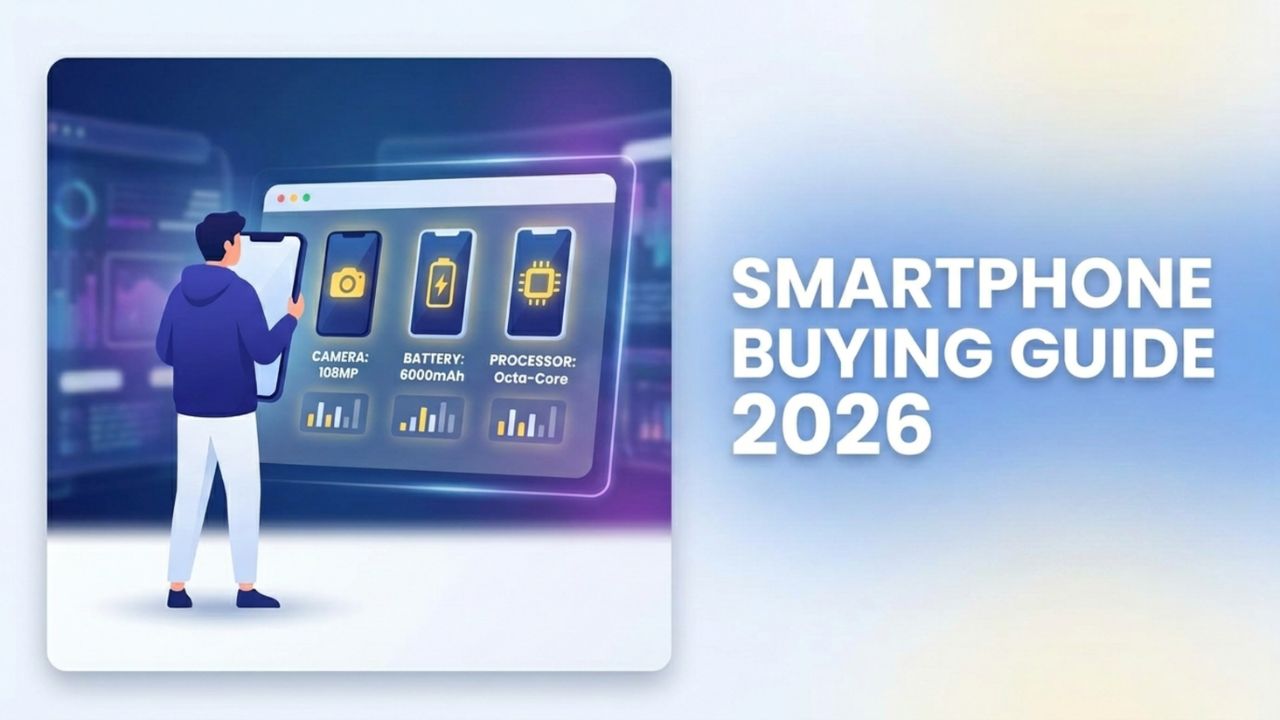
Choosing a smartphone in 2026 is no longer a simple spec comparison. With AI-driven features, powerful chipsets, and rapid innovation cycles, buyers now need a more structured approach to avoid overspending or choosing the wrong device.
The market is saturated with options across budget, mid-range, and flagship categories. This guide breaks down the key factors that actually matter, helping you make a practical and future-ready decision.
Understanding Your Usage Before Buying
The first step is defining how you will use the smartphone. A gaming-focused user requires a completely different setup compared to someone who primarily uses social media or productivity apps.
If your usage revolves around photography, camera hardware and image processing should be prioritized. For gaming or heavy multitasking, processor performance and thermal management become critical. Meanwhile, general users should focus on battery life, software stability, and display quality.
This clarity prevents unnecessary spending on features that may not add real value.
Budget Planning and Smart Spending Strategy
Smartphones in 2026 are broadly divided into three segments. Budget devices cover essential needs, mid-range phones offer balanced performance, and flagship devices deliver premium features.
A practical strategy is to consider last year’s flagship models. These devices often drop in price but still outperform newly launched mid-range phones in performance, camera quality, and build.
Avoid choosing a phone solely based on launch hype. Instead, evaluate its long-term usability.
Performance: Processor, RAM, and Storage
Performance determines how smoothly your device operates over time. A powerful processor ensures faster app loading, better gaming experience, and improved battery efficiency.
In 2026, at least 6GB RAM is acceptable, but 8GB or more is recommended for long-term use. Storage should not be below 128GB, considering the increasing size of apps and media files.
Balanced hardware is more important than chasing top-end specifications, especially for non-gaming users.
Camera Quality: Focus on Real Output
Modern smartphones rely heavily on computational photography. This means image quality depends not only on megapixels but also on sensor size and AI processing.
Look for consistent performance in low-light conditions, stable video recording, and natural color reproduction. Features like optical image stabilization and advanced night modes are more valuable than high megapixel counts.
For most users, a reliable dual or triple camera setup is sufficient if optimized properly.
Battery Life and Charging Capabilities
Battery performance remains one of the most critical decision factors. A smartphone should comfortably last a full day under moderate to heavy usage.
Devices with 4500mAh to 5500mAh capacity are now standard. Fast charging support also plays a key role, especially for users with tight schedules.
However, extremely high charging speeds should be balanced with battery health and long-term durability.
Display Experience and Visual Quality
Display quality directly impacts daily usage. In 2026, AMOLED or OLED panels with high refresh rates are widely available, even in mid-range devices.
A 120Hz refresh rate ensures smoother scrolling and better gaming performance. Brightness levels are equally important, particularly for outdoor visibility.
A good display enhances both entertainment and productivity, making it a crucial factor for most users.
Software Experience and Long-Term Updates
Software stability and update support are often overlooked but critically important. A clean and optimized user interface improves performance and reduces lag over time.
Devices offering at least 3–5 years of software updates are more future-proof. The choice between Android and iOS depends on user preference, but both ecosystems now offer strong security and performance.
Long-term updates ensure better device longevity and security compliance.
AI Features and Future-Readiness
Artificial intelligence is now deeply integrated into smartphones. Features like real-time translation, smart photo editing, and intelligent battery optimization are becoming standard.
Devices with strong on-device AI capabilities offer better privacy and faster performance compared to cloud-dependent solutions.
Choosing a phone with advanced AI support ensures it remains relevant for the next few years.
Connectivity and Build Quality
5G connectivity is now standard, but its usefulness depends on network availability in your region. Other factors like build quality, water resistance, and biometric security add to overall usability.
Premium materials and solid construction improve durability, especially for long-term users.
Quick Buying Checklist
- Set a clear budget range
- Identify your primary usage (gaming, camera, battery, or general use)
- Choose at least 8GB RAM and 128GB storage
- Prioritize balanced performance over extreme specs
- Check the software update policy before buying
Final Analysis
The ideal smartphone in 2026 is not the one with the highest specifications, but the one that offers the best balance between performance, battery life, camera quality, and software support.
A well-informed decision ensures that your device remains efficient and relevant for at least 2–3 years, without frequent upgrades.