
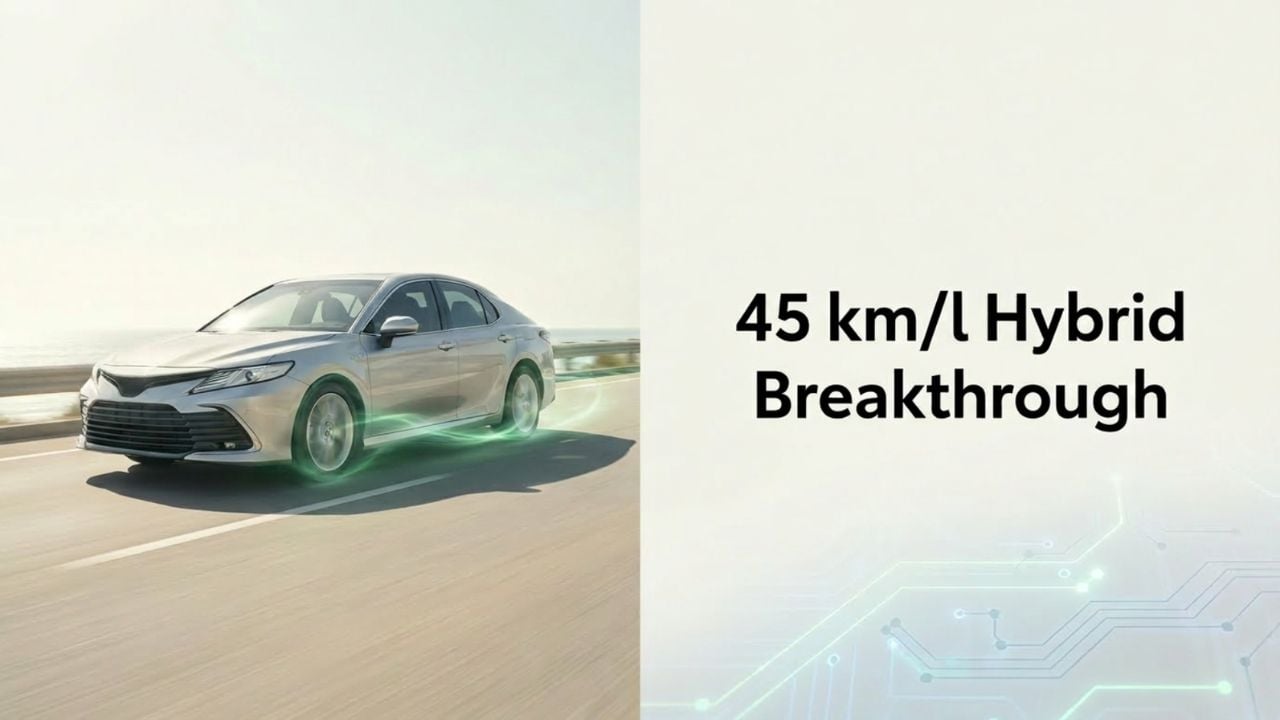
Chinese automaker Geely Auto has introduced a new artificial intelligence-driven hybrid technology that is drawing global attention for its claimed fuel efficiency. The company’s latest i-HEV (Intelligent Hybrid Electric Vehicle) system has reportedly achieved a record-breaking mileage figure under certified test conditions.
The announcement is being seen as a major development in the hybrid vehicle segment, especially as automakers continue to balance performance, efficiency, and sustainability in the transition toward cleaner mobility.
Table of Contents
Record Mileage Claim and Validation
The highlight of the announcement is a fuel consumption figure of 2.22 litres per 100 kilometres, which translates to approximately 45 kilometres per litre. This result was achieved using a Geely Emgrand sedan equipped with the new hybrid system.
According to the company, this performance has been validated by Guinness World Records, making it one of the most efficient hybrid benchmarks recorded in a controlled environment. The figure has also been reported by international agencies, strengthening its credibility.
However, it is important to understand that such results are typically recorded under specific test conditions, and actual mileage may vary depending on driving habits, traffic, and environmental factors.
What is the i-HEV Hybrid Technology
Geely’s i-HEV system is not just a conventional hybrid setup. It integrates artificial intelligence to manage energy distribution between the petrol engine and electric motor in real time.
The system continuously evaluates multiple factors, including:
- Road conditions
- Traffic patterns
- Driving behavior
- Weather and environmental inputs
Based on this data, the vehicle intelligently decides whether to operate in electric mode, hybrid mode, or engine-dominant mode, ensuring optimal fuel usage at all times.
Performance and Efficiency Enhancements
Beyond fuel savings, the company has made several strong claims regarding performance and engineering efficiency.
Geely states that the system delivers over 10% higher energy efficiency compared to earlier hybrid technologies. In addition, the hybrid engine is said to achieve a thermal efficiency of 48.41%, which is considered exceptionally high in the automotive industry.
The system also focuses on smoother driving and better responsiveness, combining electric and petrol power in a more seamless manner.
Planned Rollout Across Models
Geely has confirmed that the i-HEV technology will not remain limited to a single vehicle. Instead, it is expected to be introduced across multiple models in its lineup.
The models expected to feature this technology include:
- Emgrand
- Preface
- Monjaro
- Starray
This indicates that the company is preparing for large-scale deployment of its AI-based hybrid system in both sedans and SUVs.
Growing Competition in Hybrid Segment
The launch of this technology signals a stronger push by Chinese automakers into the global hybrid market. For years, Japanese manufacturers have dominated this segment, but new advancements like Geely’s i-HEV system suggest increasing competition.
By combining AI-driven decision-making with hybrid engineering, Geely aims to redefine efficiency standards and attract buyers looking for lower fuel costs without shifting fully to electric vehicles.
Final Perspective
Geely’s latest announcement highlights how artificial intelligence is beginning to play a central role in automotive innovation. While the 45 km/l mileage figure represents a controlled benchmark, it reflects the growing potential of hybrid systems when combined with advanced data-driven technologies.
If real-world performance comes close to these figures, this development could mark a significant shift in how hybrid vehicles are designed and perceived in the coming years.